

Explore Alliance Ambassadors - Dr. David H. Levy

Born in 1948, David H. Levy is a legendary astronomer, renowned for his discoveries of comets and asteroids, and a dedicated astronomy educator. His prolific comet discoveries and extensive contributions to astronomical literature have solidified his legacy in the field. While his academic journey led him to earn bachelor's and master's degrees in English literature, Levy's passion for astronomy persisted from an early age.
The 166th Global Star Party with Co-hosts David Levy and David Eicher gets Started
In 1967, Levy faced a significant challenge when he found himself on the brink of expulsion from the Royal Astronomical Society of Canada's Montreal Centre due to a disagreement with some administrative members. Despite discouraging comments from a senior RASC official in 1968, Levy's perseverance prevailed. Subsequently, a transformative correspondence with Isabel Williamson, a key figure in his near-ouster, evolved into visits, the presentation of the National Service Award to Miss Williamson, and the naming of the Montreal Centre's Observatory in her honor.
Levy's astronomical journey soared as he collaborated with Gene and Carolyn S. Shoemaker, collectively discovering 23 comets, with nine of them being visual breakthroughs. His literary contributions to astronomy are equally noteworthy, with 34 books to his name. Among his notable works are "The Quest for Comets," a definitive biography of Pluto-discoverer Clyde Tombaugh (2006), and "Shoemaker by Levy," a tribute to Gene Shoemaker. Levy's insightful articles have graced publications like Sky & Telescope, Parade Magazine, Sky News, Astronomy Magazine, and the more recent Sky's Up magazine.
His comet discoveries include significant periodic comets such as 118P/Shoemaker-Levy, 129P/Shoemaker-Levy, 135P/Shoemaker-Levy, 137P/Shoemaker-Levy, 138P/Shoemaker-Levy, 145P/Shoemaker-Levy, and 181P/Shoemaker-Levy. Additionally, Levy stands as the sole discoverer of two periodic comets, P/1991 L3 and P/2006T1, showcasing his unique contributions in visual, photographic, and electronic comet discovery methods.
Beyond his individual achievements, David H. Levy has played a pivotal role in fostering a global appreciation for the wonders of the night sky, including his involvement in the Explore Alliance's Global Star Party.
On February 28, 2010, Levy was awarded a Ph. D. from the Hebrew University of Jerusalem for his successful completion of his thesis "The Sky in Early Modern English Literature: A Study of Allusions to Celestial Events in Elizabethan and Jacobean Writing, 1572-1620."
David Levy lives in Vail, Arizona, home of the Jarnac Observatory.
Outreach
David Levy is a prolific speaker, writer, and public astronomy outreach enthusiast, where he often involved in showing the public the night sky. Levy is available for personal appearances and lectures.
Awards
The Asteroid 3673 Levy was named in his honor. Levy was awarded the C.A. Chant Medal of the Royal Astronomical Society of Canada in 1980. In 1993 he won the Amateur Achievement Award of the Astronomical Society of the Pacific. In 2007, Levy received the Smithsonian Astrophysical Observatory's Edgar Wilson Award for the discovery of comets. In 2008, a special edition telescope, "The Comet Hunter" was co-designed by Levy and Scott Roberts, and manufactured by Explore Scientific.
Publications
-
Clyde Tombaugh: Discoverer of Planet Pluto
- Shoemaker by Levy: The Man Who Made an Impact
- Starlight Nights: The Adventures of a Star-Gazer
- David H. Levy's Guide to Observing and Discovering Comets
- David Levy's Guide to Eclipses, Transits, and Occultations
- Eclipse: A Journey to Darkness and Light
- David Levy's Guide to Observing Meteor Showers
- Impact Jupiter: The Crash of Comet Shoemaker-Levy 9
- Comets: Creators and Destroyers
- Quest for Comets [9/1/1995] David H. Levy
- Observing Comets, Asteroids, Meteors, and the Zodiacal Light (Practical Astronomy
- Great Comets
- Observing Variable Stars: A Guide for the Beginner
- David Levy's Guide to Variable Stars
- Stars and Planets (Discoveries)
- Deep Sky Objects: The Best And Brightest from Four Decades of Comet Chasing
- Skywatching (Nature Company Guides)
- Skywatching (Revised and Updated)
- Advanced Skywatching: The Backyard Astronomer's Guide to Starhopping and Exploring the Universe (The Nature Company Guides)
- David Levy's Guide to the Night Sky
- Clipper, Cosmos, and Chlidren: Finding the Eureka Moment
- The Starlight Night: The Sky in the Writings of Shakespeare, Tennyson, and Hopkins (Astrophysics and Space Science Library, 419)
- Starry Night: Astronomers and Poets Read the Sky
- Star Trails: 50 Favorite Columns from Sky & Telescope
- Cosmic Discoveries: The Wonders of Astronomy
- More Things in Heaven and Earth: Poets and Astronomers Read the Night Sky
- The Sky: A User's Guide
- Practical Skywatching (Nature Companion Series)
- Binocular Stargazing
- Skywatching : The Ultimate Guide to the Universe
- Ultimate Universe: The Most Up-To-Date Guide to the Cosmos
- Cosmology 101 (Ibooks Education 101)
- Sharing The Sky
- Étoiles et planètes
- Estrellas y Planetas
- Making Friends with the Stars
- ASTRONOMY DAY HANDBOOK Bringing Astronomy to the People
Activities and Events
- Global Star Party
- Arizona Dark Sky Star Party - October 23-27, 2019
David Levy's Gear Recommendations:
- Explore Scientific 12-inch Truss Tube Dobsonian Telescope
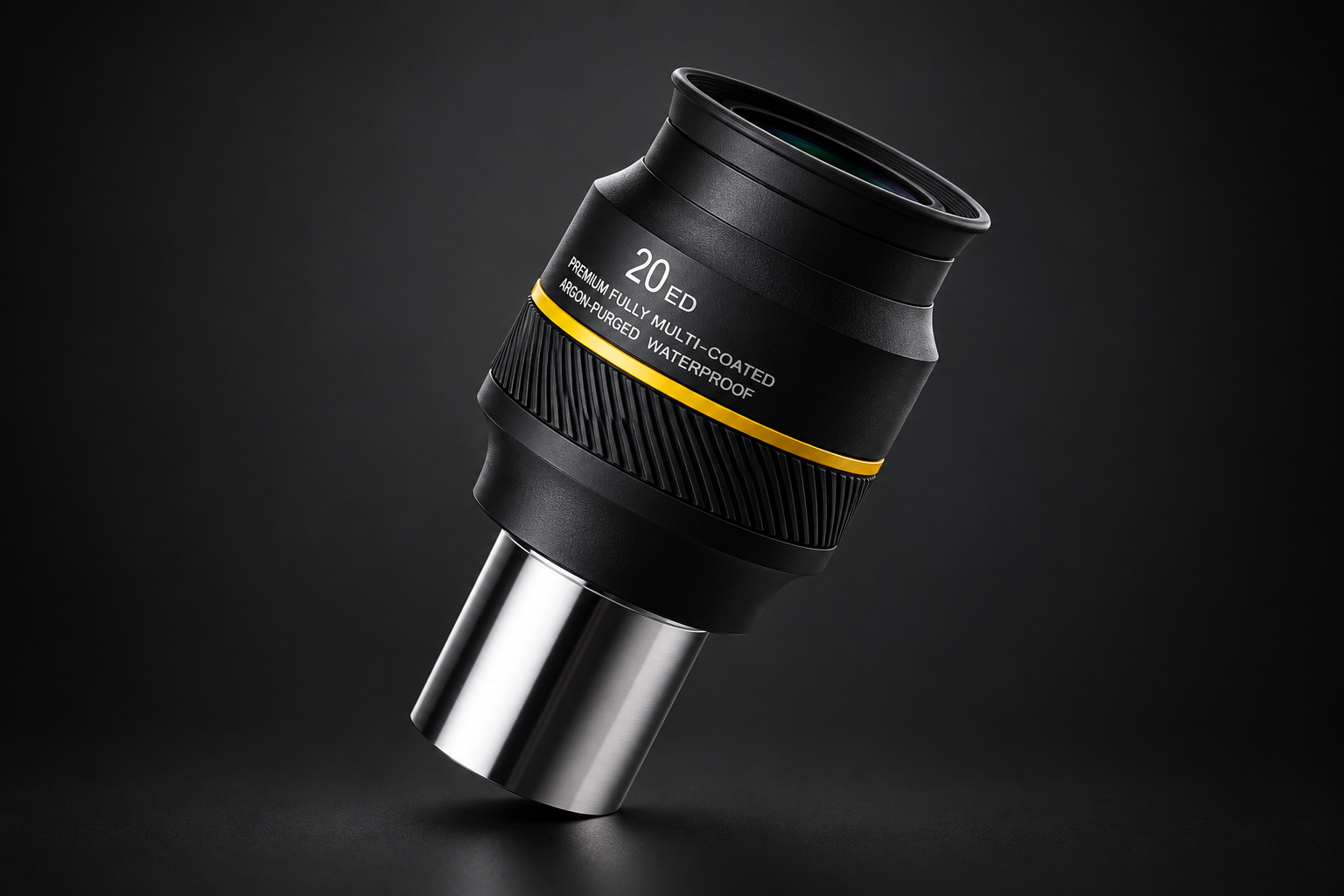
- Explore Scientific 92° Series Long Eye Relief Waterproof Eyepieces
[Return to Directory of Ambassadors]