


Guide to Cleaning and Caring for Telescope Eyepieces and Optics
When it comes to cleaning telescope optics—especially eyepieces and objective lenses—the golden rule is simple: clean them only when necessary.
Although it may seem counterintuitive, excessive cleaning can do more harm than good. Cleaning tissues and microfiber cloths can trap tiny abrasive particles such as dust or sand. If those particles are dragged across the glass, they can scratch the optical coatings or lens surface, permanently reducing image quality.
Properly maintained optics provide bright, high-contrast, sharp views, but unnecessary cleaning increases the risk of accidental damage.
Another important consideration is that most conventional eyepieces are not waterproof. If too much cleaning solution is applied, liquid can seep between the internal lens elements, where it is extremely difficult—or impossible—to remove. This can result in internal fogging, residue, or permanent damage.
Don’t Worry About Every Speck
A few tiny dust particles on—or even between—lens elements are completely normal and typically have no noticeable effect on image quality.
What does reduce optical performance are:
- Fingerprints
- Skin oils
- Makeup
- Pollen
- Smudges
- Dried water spots
- General films of dust or grime
These contaminants scatter light, reducing contrast and brightness, particularly when observing planets, the Moon, or faint deep-sky objects.
Best Practices for Optical Cleaning
For the safest results:
- Always use cleaning products designed specifically for coated optical glass.
- Remove loose dust with a bulb blower or clean compressed air before touching the lens.
- Use the lightest pressure possible when wiping.
- Use only clean, lint-free tissues or microfiber cloths intended for optics.
- Follow the manufacturer's cleaning recommendations whenever available.
With proper care, your telescope optics can provide decades of outstanding performance.
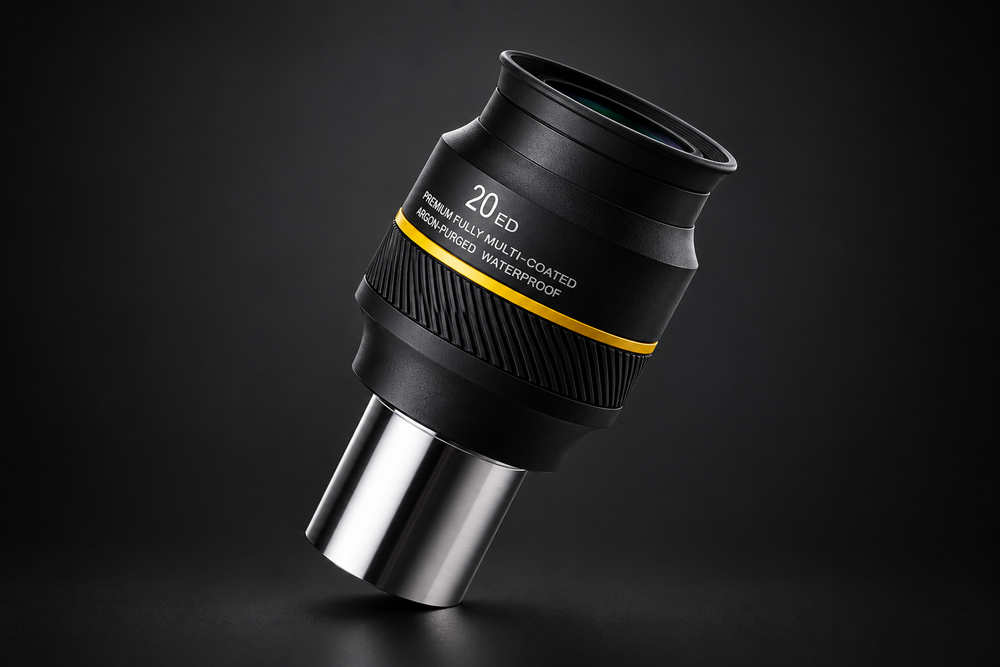
One notable exception is Explore Scientific Waterproof Eyepieces. Because they are fully sealed and nitrogen- or argon-purged, cleaning solutions cannot seep between the internal lens elements. This makes them significantly easier and safer to clean than conventional eyepieces.
General Eyepiece Cleaning Advice | Waterproof Eyepieces | Lens Care | Storage Tips
Proper care of your telescope eyepieces and optical components helps maintain maximum contrast, sharpness, and overall performance. The following recommendations provide safe cleaning techniques, proper storage practices, and guidance for both waterproof and conventional eyepieces.
Recommended Cleaning Solutions
Spray Bottle #1 – Pure Distilled Water:
Use pure distilled water for gentle rinsing and final cleaning.
Spray Bottle #2 – 95%+ Isopropyl Alcohol:
Excellent for removing fingerprints, oils, and smudges without leaving residue.
Spray Bottle #3 – Custom Lens Cleaner:
- 1/3 isopropyl alcohol
- 2/3 distilled water
- 3 drops of clear, unscented dish soap (Dawn®)
This solution is effective for removing stubborn residue while remaining safe for properly coated optical surfaces.
Essential Optical Cleaning Tools
- Bulb blower or oil-free, moisture-free compressed air
- Photographic-grade camel hair brush
- Distilled water
- Non-lotioned, unscented facial tissues (such as Kleenex® Softique®)
- Tissue wands (rolled tissues for precision cleaning)
- Cold running tap water (for waterproof optics only)
Light Dust
In most cases, light dust does not require cleaning.
If you choose to clean the optics:
- Remove any eyecups and dust caps.
- Blow away loose dust with a bulb blower or clean compressed air.
- Gently remove remaining particles with a camel hair brush.
- Lightly mist the surface with distilled water if needed.
- Blow dry.
Moderately Dirty (Dust, Pollen)
-
Waterproof Eyepieces
- Rinse under cool running tap water.
- Mist with distilled water.
- Blow dry using clean compressed air.
Conventional Eyepieces
- Remove loose debris with air or a camel hair brush.
- Lightly mist with distilled water.
- Gently blot or wipe if necessary.
- Blow dry.
Very Dirty (Fingerprints, Smudges)
- Remove loose particles with air or a brush.
- Waterproof eyepieces: rinse under cool tap water.
- Conventional eyepieces: skip the tap-water rinse.
- Apply isopropyl alcohol using a tissue wand.
- Finish with distilled water.
- Blow dry.
Removing Severe Buildup (Resins, Makeup, Food, etc.)
- Remove loose debris with air and a camel hair brush.
- Waterproof eyepieces: rinse under cool tap water.
- Apply the custom lens cleaning solution with a clean tissue wand.
- Follow with isopropyl alcohol.
- Finish with distilled water.
- Dry thoroughly with clean compressed air.
Optimal Storage of Telescope Optics
Even clean optics can degrade if stored improperly. Follow these optical storage best practices:
-
Even perfectly clean optics can deteriorate if stored improperly.
For the longest service life:
- Store optics in a cool, dry, temperature-stable location.
- Avoid damp basements, garages, and hot attics.
- Avoid airtight foam-lined cases that can trap moisture.
- Place silica gel packs or reusable desiccants in storage cases.
- Replace or recharge desiccants regularly.
- Keep optics away from chemicals, solvents, perfumes, or other materials that may outgas.
- Allow optics to dry completely before storing after observing in humid or dewy conditions.
- Store eyepieces upright in padded, ventilated cases.
- Periodically inspect optics for fungus, haze, or residue.
Questions or Concerns?
If you have any concerns about cleaning or caring for your telescope optics, we recommend contacting the product manufacturer. For Explore Scientific-branded optics, our Customer Service team is here to help.
Explore Scientific Customer Service:
(866) 252-3811
(Monday–Friday, 8 AM–5 PM Central Time)
Brand-Specific Advice
These cleaning recommendations are appropriate for most telescope eyepieces. However, always follow your manufacturer's instructions regarding coatings, waterproof construction, and internal sealing.
Some eyepieces are fully sealed, while others are not. Non-waterproof optics require extra care to prevent cleaning fluids from entering the internal lens assembly.
Final Thoughts
A few dust specks on your optics are rarely a problem. Fingerprints, oils, pollen, and accumulated grime are far more likely to reduce image quality by scattering light and lowering contrast.
By cleaning only when necessary, using the proper materials, and storing your equipment correctly, you can preserve your telescope's performance and enjoy crisp, high-contrast views of the night sky for many years.