
Neutral Density Filters


Neutral Density Moon Filters
The Moon can be dazzlingly bright through a telescope, especially near full phase, which washes out detail and makes extended viewing uncomfortable. A neutral density (ND) filter evenly reduces the amount of light reaching your eye without changing color, so you can comfortably study lunar craters, mountain ranges, rilles and the terminator line in fine detail.
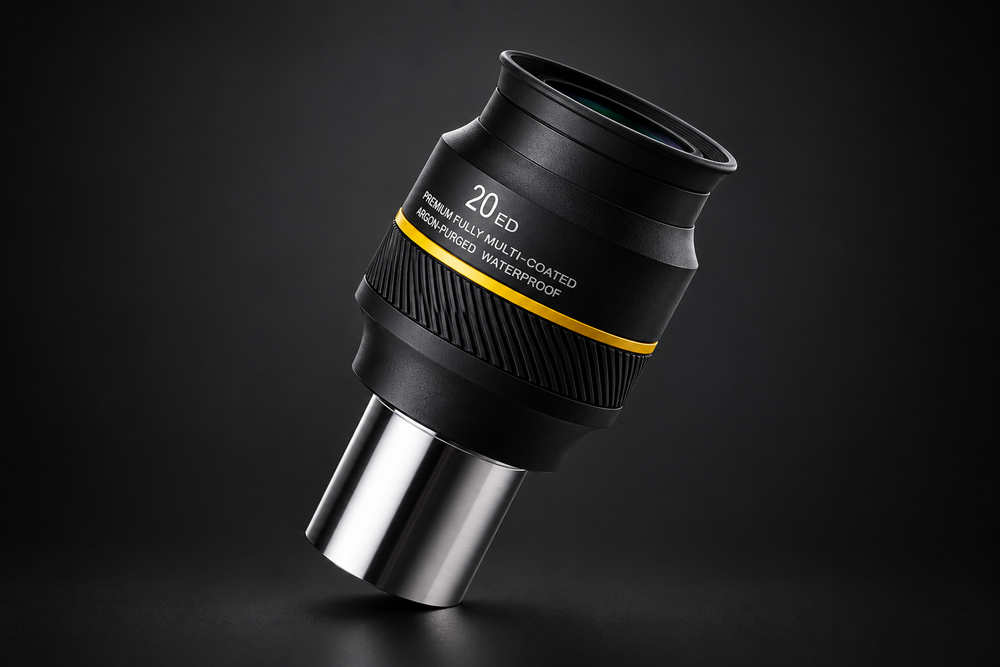
Explore Scientific neutral density filters thread onto standard eyepieces and diagonals and are also useful for observing bright planets such as Venus and Jupiter, where reducing glare can improve contrast. They are a simple, affordable accessory that makes lunar and planetary observing far more enjoyable, especially with larger telescopes that gather a great deal of light. For variable control over brightness, consider a polarizing Moon filter as well.
Neutral density filters are rated by optical density; higher numbers block more light. An ND 0.9 filter, for example, transmits roughly 13 percent of the incoming light, a comfortable reduction for most lunar observing. ND filters must never be used for observing the Sun; only certified full-aperture solar filters are safe for solar viewing. For astronomers who spend time studying the Moon's craters, maria and mountain ranges, an ND filter is one of the most useful and affordable accessories to keep in the eyepiece case.
Free United States Shipping
Orders $49.99+ shipped within the continental United States qualify for free standard shipping. Learn more.
Explore Scientific Warranty
Register your product within 60 days to activate your warranty coverage. Learn more.
30 Day Returns
Returns are accepted within 30 days if the item is in original condition. Learn more.
Dedicated Customer Support
Our customer service team is here to help with product support and warranty service. Learn more.